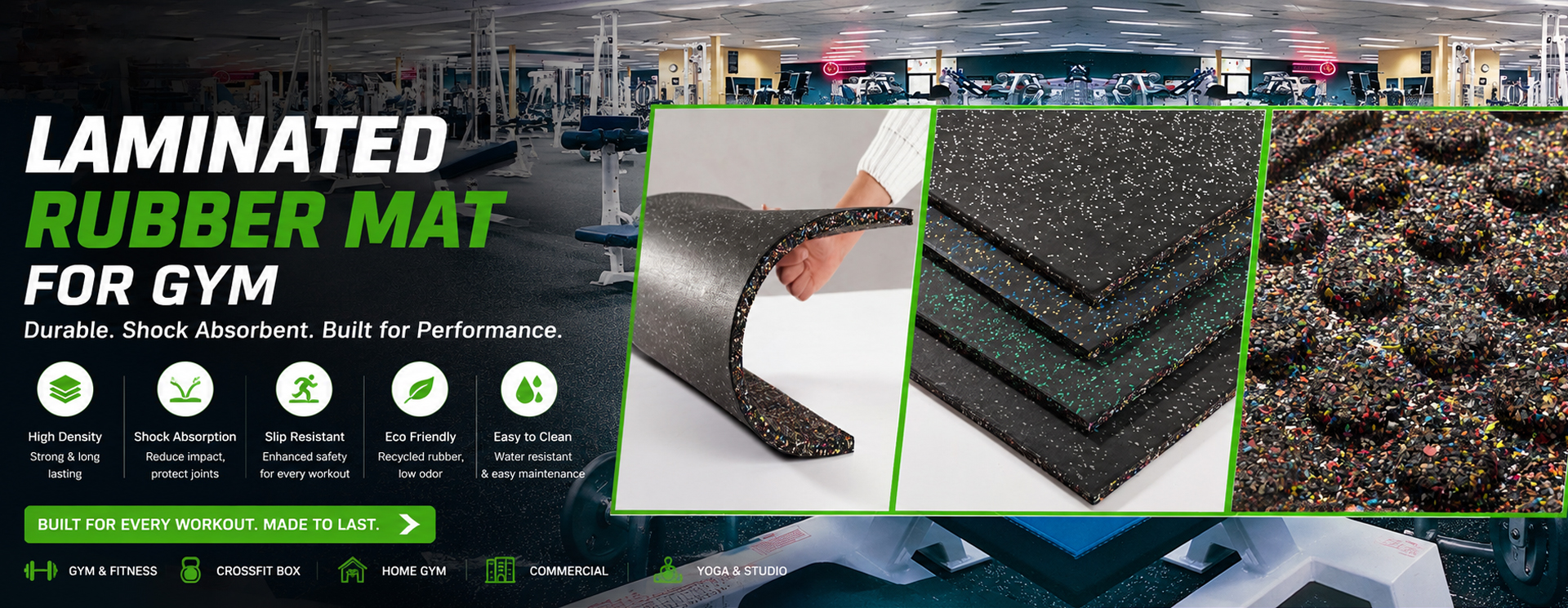
banner 1

Commercial Gym Flooring Supplier - China Manufacturer

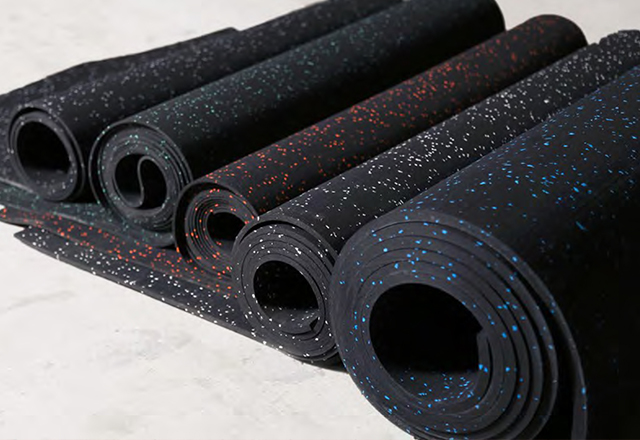
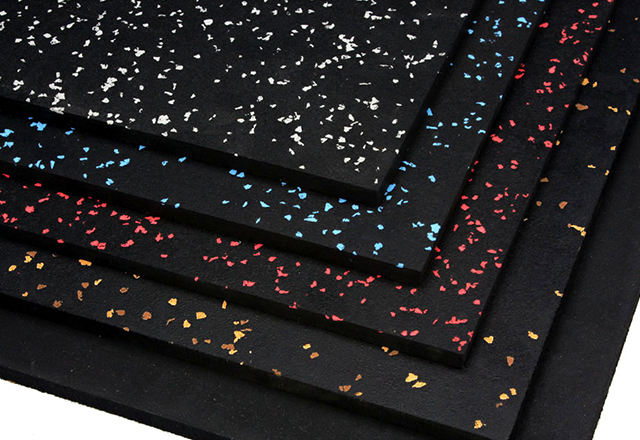
As a China-based manufacturer and a trusted commercial gym flooring supplier, I bring practical, long-lasting floor solutions to fitness facilities. My catalog covers rubber, vinyl, and composite flooring designed for heavy foot traffic, impact from machines, and easy maintenance. I work directly with gym owners and facility managers, delivering samples fast, competitive quotes, and flexible MOQ. Every batch goes through strict quality checks, with anti-slip surfaces, moisture resistance, and sound dampening to protect equipment and members. I can tailor thicknesses, textures, and colors to match your brand and space. With short lead times and reliable shipping, I serve customers across China and overseas, helping you meet project deadlines. If you need a dependable commercial gym flooring supplier from a real manufacturer, I’ll provide technical datasheets, installation guides, and certifications to support your RFP and rollout.
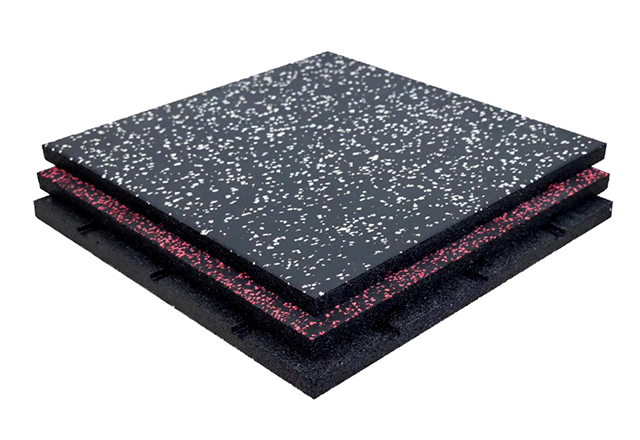
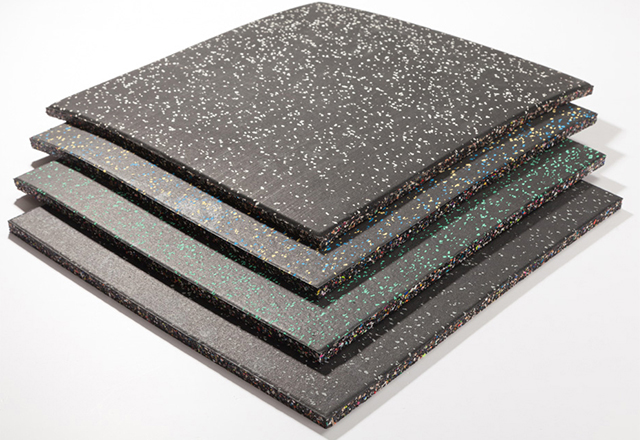
Hot Selling Product

commercial gym flooring supplier Dominates From Concept to Delivery

As a leading commercial gym flooring supplier, we control the entire process from concept to delivery to ensure performance, safety, and longevity for facilities worldwide. Our team partners with architects, designers, and procurement teams to develop tailored solutions — from shock-absorbent rubber tiles to reinforced turf — backed by rigorous material testing, industry certifications, and sustainable sourcing. We translate project requirements into precise specifications, prototypes, and scalable production plans to meet timelines and budgets. Manufacturing with strict quality control, advanced tooling, and ISO-standard procedures, we manage logistics, customs documentation, and global shipping to deliver on schedule. On-site installation support, maintenance guidance, and responsive after-sales service complete the offering, making long-term partnerships simple and reliable for global buyers seeking turnkey gym flooring solutions.

{ commercial gym flooring supplier Dominates From Concept to Delivery}
Product Category Product Code Material Composition Thickness (mm) Density (kg/m³) Durability (1-10) Abrasion (mm³) Slip Resistance (COF) Acoustic Reduction (dB) Recommended Use Fire Rating Recycled Content (%) Installation Typical Lead Time (weeks) Warranty (years) Maintenance Thermal Conductivity (W/m·K) Certifications
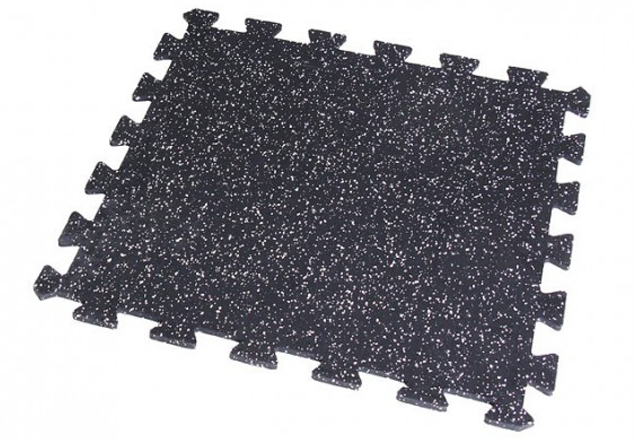
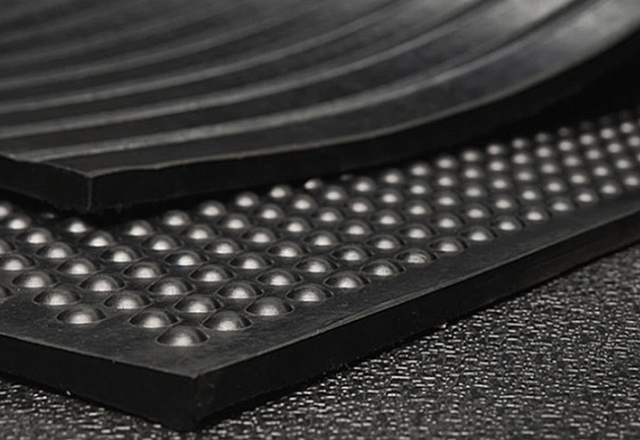
Rubber Gym Tile RGT-1001 SBR / EPDM blend 10 1100 9 ≈80 0.60 (wet) 12 Weightlifting, free-weights EN 13501-1: Bfl‑s1 65 Loose-lay / Interlocking 2–4 5 Sweep + monthly deep clean 0.15 ISO 9001, REACH compliant
Rolled Rubber Sheet RRS-2002 Virgin + recycled SBR blend 6 1000 8 ≈100 0.55 (dry) 10 Cardio areas, general fitness Class C (EN) 50 Adhesive or loose-lay 3 3 Weekly mopping 0.13 REACH, RoHS
EVA Foam Interlocking EVA-3003 Cross-linked EVA foam 25 180 6 — (foam) 0.45 8 Yoga, kids, light workouts Class D 10 Interlocking tiles 1–2 2 Daily sweeping 0.05 OEKO-TEX Standard 100
PVC Interlocking Performance PVC-4004 High-density PVC + mineral filler 8 1200 8 ≈70 0.60 11 Studios, cardio, multipurpose Bfl‑s1 20 Interlocking or glue-down 2 4 Weekly cleaning 0.16 EN 14041, ISO 14001
Cork Underlay with PU Top CORK-5005 Natural cork + PU wear layer 12 300 7 ≈120 0.50 14 Studio, rehabilitation Bfl‑s1 95 Glue-down 4 6 Low, occasional resealing 0.09 FSC (cork), ISO 9001
PU Seamless Sports Floor PU-6006 Polyurethane site-applied system 6 — (system) 9 ≈60 0.58 9 Courts, multipurpose sports Bfl‑s1 5 Site-applied seamless 3–6 8 Annual recoating 0.12 EN 14877, ISO 9001
Artificial Turf (Shockpad + Turf) TURF-7007 Polyethylene fibers + SBR/TPU infill 30 ≈850 8 0.65 7 Functional training, turf drills Class C 40 Permanent anchor / adhesive 4 7 Brushing + infill maintenance 0.18 ISO 9001, REACH

Related Products

banner 4

commercial gym flooring supplier Factory Ahead of the Curve

Commercial Gym Flooring Demand and Supply Efficiency — 12‑Month Trend

This 12‑month visualization tracks two complementary operational dimensions for commercial gym flooring: Monthly Orders (units) and Average Lead Time (days). The demand series shows a steady growth from January through July, peaking in July, followed by a gradual decline toward December. The lead time curve moves inversely across the same period: higher lead times early in the year drop substantially at mid‑year when demand peaks, then tick upward again as demand cools. Several actionable insights emerge. First, the peak in orders during summer months indicates seasonal project concentration — installers and facility managers schedule larger rollouts mid‑year. Suppliers should prepare stacking inventory and workforce capacity in Q2 to meet the July surge while keeping safety stock minimal in low months to reduce holding costs. Second, the inverse relationship between orders and lead time suggests successful supply chain scaling: as orders increase, processes or supplier prioritization shorten lead times, likely due to planned production runs or expedited logistics. This pattern implies good responsiveness but also potential stress points; ensuring supplier redundancy and clear lead‑time SLAs can preserve this responsiveness without compromising quality. Finally, the year‑end pickup in lead time despite moderate demand signals potential capacity constraints or holiday logistics friction; proactive planning for holiday season warehousing and carrier bookings can reduce year‑end delays. Monitoring these two dimensions together enables procurement and operations teams to balance inventory, production scheduling, and customer commitments for consistent service levels across the year.

Top Selling Products