
Anti-Slip PVC Floor Tiles for Industrial Use: How to Choose the Right Flooring
Slippery floors are a common safety concern in warehouses, manufacturing plants, distribution centers, automotive workshops and other industrial facilities. Dust, oil, water and production residues can change floor conditions throughout the working day, increasing the risk of slips and creating challenges for facility managers.
Anti-slip PVC floor tiles for industrial use can be a practical flooring option when their surface characteristics, load capacity, chemical compatibility and installation requirements match the operating environment. Their modular format may also make phased installation and localized repairs easier than some conventional flooring systems.
However, not every textured PVC tile provides the same level of slip resistance. Surface pattern, material formulation, contamination, footwear, cleaning procedures and test conditions all influence real-world performance.
This guide explains how to evaluate anti-slip PVC flooring for industrial applications and what buyers should check before placing an order.
1. What Are Anti-Slip PVC Floor Tiles?
Anti-slip PVC floor tiles are modular flooring products made from polyvinyl chloride (PVC), designed with surface textures or patterns intended to improve traction under specified conditions.
Depending on the product design, the surface may feature coin, diamond, raised-line or other textured patterns. Tiles may use interlocking edges to create a continuous floor covering without requiring adhesive across the entire installation, although the appropriate installation method depends on the product and operating conditions.
Common applications include:
- Warehouses and distribution centers
- Manufacturing plants and assembly areas
- Industrial workshops and maintenance facilities
- Packaging and logistics areas
- Automotive service workshops
- Selected areas exposed to occasional moisture or contamination
The term anti-slip should not be interpreted as a guarantee that a floor cannot become slippery. Performance depends on the complete system, including the tile surface, contaminants, cleaning practices, footwear and installation quality.
For industrial procurement, the objective is to select a flooring product with documented slip-resistance performance appropriate to the intended environment, rather than choosing by surface appearance alone.
2. Key Benefits of Anti-Slip Industrial PVC Flooring
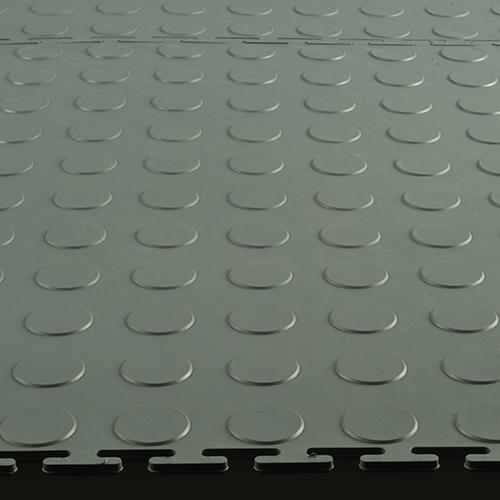
Textured Surface Options
Coin, diamond and other textured finishes provide different surface profiles. The most suitable design depends on the contaminants present, footwear, cleaning methods and the required slip-resistance performance.
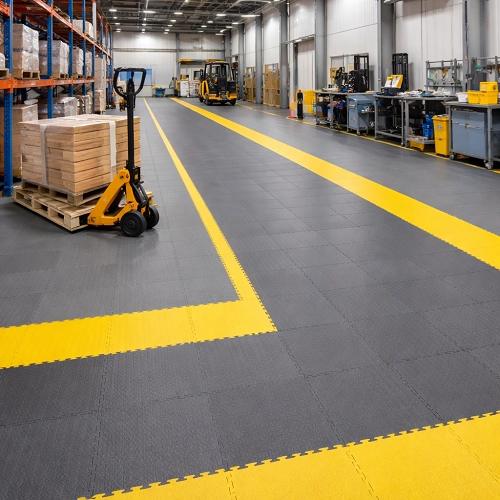
Modular Installation
Interlocking tiles can support phased flooring upgrades and may reduce the need to remove an entire floor when a localized section requires replacement. Installation planning should still account for edges, transitions, expansion and equipment traffic.
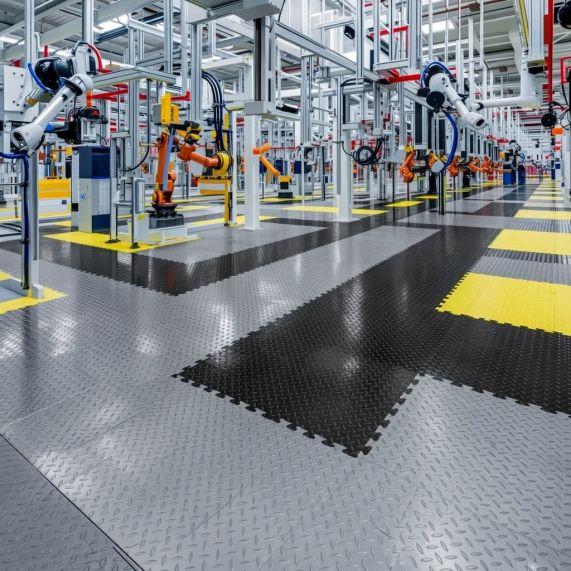
Adaptability to Different Work Areas
Modular PVC flooring may be suitable for selected production, storage and maintenance areas. The correct specification depends on floor loads, traffic patterns, temperature, moisture and chemical exposure.
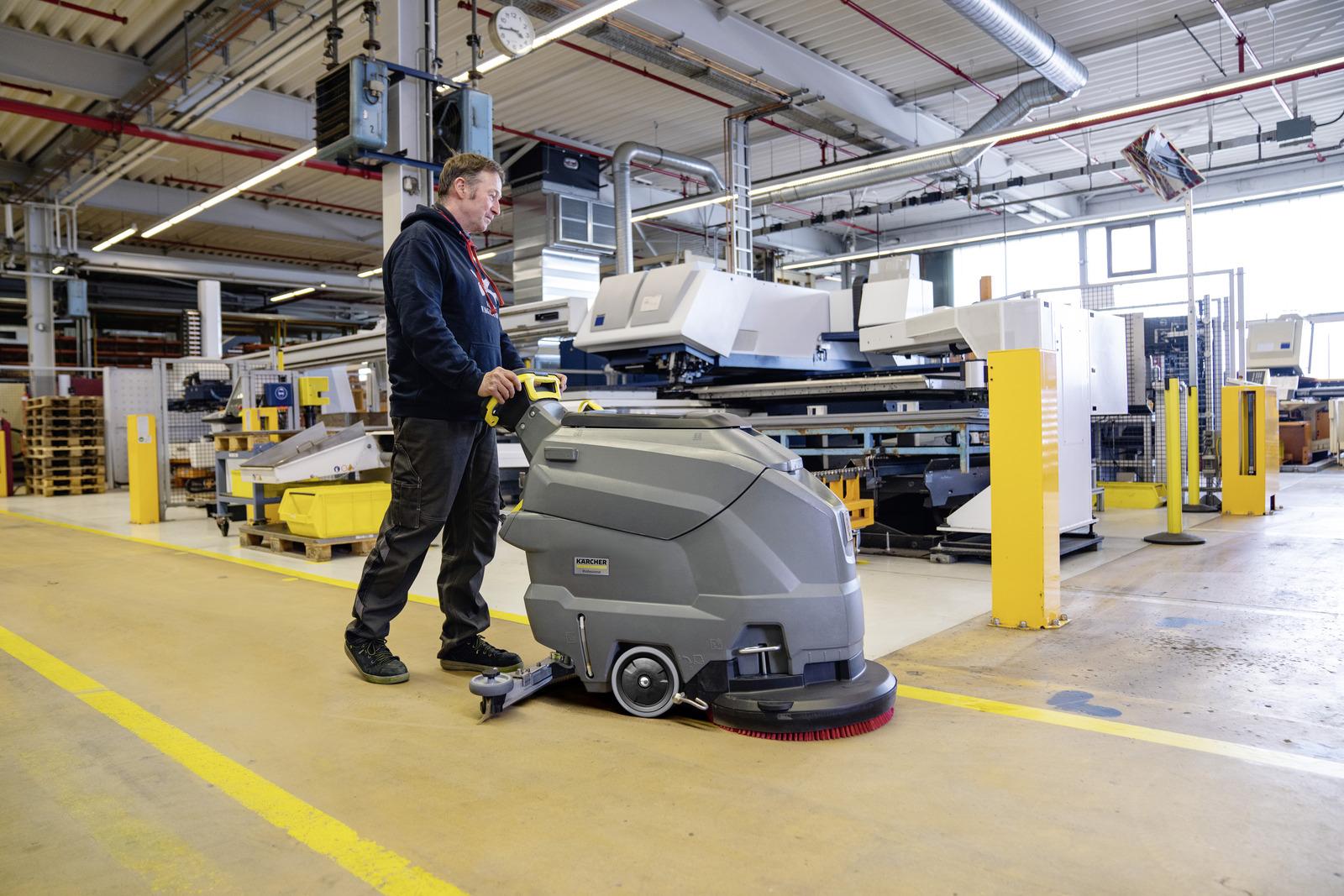
Maintainability
Routine sweeping and compatible cleaning procedures can help maintain floor hygiene and surface performance. Textured surfaces may retain dirt or residues if the texture and cleaning method are poorly matched.
3. How Does Surface Texture Affect Slip Resistance?
Surface texture is one of the most visible features of anti-slip PVC tiles, but it is not a complete measure of slip resistance.
A raised pattern may provide additional surface features for contact with footwear. However, a deeper or more aggressive texture is not automatically safer under every condition.
Consider these factors when comparing tile surfaces:
Factor What buyers should evaluate
Surface pattern Coin, diamond, raised-line or other textures
Dry conditions Performance under normal, clean operating conditions
Wet conditions Performance when exposed to water or other relevant liquids
Oil contamination Results under the specific oil-contaminated test conditions, if available
Cleaning Whether dirt, grease or residues can be removed effectively
Footwear Compatibility with the footwear commonly used on site
Equipment movement Suitability for carts, pallet trucks and other wheeled equipment
For a dry warehouse, a different surface may be appropriate than for a maintenance bay where oil contamination is possible.
The correct choice should be based on the actual risk assessment and relevant test evidence, not on pattern names alone.
4. Which Slip-Resistance Standards Should Buyers Check?
When sourcing anti-slip PVC floor tiles, ask suppliers which slip-resistance standard was used, which test conditions applied and whether the report covers the exact product being offered.
Depending on the application and market, relevant methods may include:
- EN 13893: A test method for determining the coefficient of friction of dry flooring surfaces under specified conditions.
- EN 16165: A European standard covering methods for determining the slip resistance of pedestrian surfaces, including different test approaches.
- ANSI A326.3: A test method used to measure the dynamic coefficient of friction of hard-surface flooring under specified conditions. Confirm its suitability for the particular PVC product and intended application.
These methods are not interchangeable, and a result from one method does not automatically establish performance under another method or in every real-world condition.
For example, a dry-surface coefficient of friction result does not prove that the same tile will provide adequate traction when contaminated with oil. Where wet or oily conditions are expected, request evidence relevant to those conditions and confirm that the test method is suitable for the flooring type.
Important: Do Not Rely on the Word “Anti-Slip” Alone
A supplier may describe a product as anti-slip because it has a textured surface. For safety-critical purchasing decisions, request:
1. The exact test standard and method.
2. The measured result and test conditions.
3. The report date and issuing laboratory.
4. Confirmation that the report corresponds to the quoted tile construction, thickness and surface finish.
5. Any stated limitations for wet, oily or contaminated conditions.
A clear technical report is more useful than an unsupported claim such as “100% non-slip.”
5. Choosing Anti-Slip PVC Tiles for Different Industrial Environments
Different facilities have different flooring risks. The selection process should begin with the actual operating environment.
Warehouses and Distribution Centers
Warehouse floors may be exposed to pedestrian traffic, pallet trucks, forklifts, packaging debris and occasional liquid spills.
Before selecting tiles, assess:
- The frequency and routes of forklift traffic.
- Forklift wheel material, wheel dimensions and wheel loads.
- Turning, braking and repeated movement over tile joints.
- Pedestrian walkways and potential contamination points.
- The condition and flatness of the concrete substrate.
A tile that performs well under pedestrian traffic may not be suitable for repeated forklift turning. Check the product's documented mechanical performance and installation requirements.
Manufacturing Plants
Manufacturing environments may combine pedestrian movement, equipment vibration, falling objects, dust and process-specific contaminants.
Buyers should identify the type of production, likely impact exposure, temperature range, cleaning methods and any chemical contact. If oils, lubricants or cleaning agents are present, request compatibility information for the actual substances used.
Automotive Workshops
Automotive service areas can expose flooring to engine oil, grease, brake fluid, coolant and cleaning chemicals. These substances may change traction and may affect the flooring material over time.
Evaluate chemical compatibility separately from slip resistance. A tile that resists a particular substance may still become slippery when that substance remains on its surface.
Hydraulic jacks, vehicle lifts and equipment supports can create concentrated loads. Do not assume that a tile suitable for vehicles driving over it is also suitable for supporting a jack, lift or concentrated load. Confirm the requirements with the flooring and equipment manufacturers.
Packaging and Assembly Areas
Packaging and assembly areas often require a balance of pedestrian traction, cleanability and smooth movement for carts or other wheeled equipment.
The surface texture should suit both employee movement and the equipment used. Excessively aggressive textures may complicate cleaning or wheeled movement, depending on the product design.
Areas Exposed to Water or Oil
Areas exposed to liquid contamination require special attention. Water, oil, grease and process chemicals can produce different surface conditions, so a single generic slip-resistance result may not be sufficient.
Identify the contaminant, concentration where relevant, frequency of exposure, temperature and cleaning process. Then ask for suitable product-specific test data.
If the area is routinely wet or heavily contaminated, assess whether interlocking PVC tiles are appropriate at all. Other flooring systems may be more suitable for particular drainage, hygiene or chemical-resistance requirements.
6. Anti-Slip PVC Tiles vs. Smooth PVC Tiles
The main difference is the surface design, but the choice should consider more than appearance.
Comparison Textured anti-slip PVC tiles Smooth PVC tiles
Surface profile Raised or patterned surface Relatively smooth surface
Intended consideration Traction under specified conditions Ease of cleaning and smooth movement
Dirt removal Texture may require more attention Often easier to wipe, depending on the finish
Wheeled equipment Check movement and joint performance Check movement and load suitability
Slip performance Must be verified by relevant tests Must also be verified by relevant tests
Best fit Areas where a textured surface is appropriate Areas prioritizing smooth movement or cleaning
Neither design is universally better. A textured surface does not automatically guarantee better performance in every wet or oily condition, and a smooth surface should not be assumed unsafe without test evidence.
The selection should reflect the site's risk assessment, operating procedures and documented flooring performance.
7. Anti-Slip PVC Floor Tiles vs. Epoxy Flooring
Both PVC tiles and epoxy systems can be used in industrial settings, but they differ in installation, maintenance and operating requirements.
Factor Interlocking PVC floor tiles Epoxy flooring
Installation Modular installation; adhesive may or may not be required Requires suitable substrate preparation and coating application
Downtime May support phased installation Curing time may affect when the area can reopen
Localized repairs Individual tiles may be replaceable Repairs may require patching or recoating
Surface options Various molded textures and patterns Slip-resistant texture can be specified through the coating system
Substrate requirements Flatness, stability and compatibility remain important Surface preparation, moisture and concrete condition are critical
Chemical exposure Depends on PVC formulation and chemical compatibility Depends on resin system, coating build and chemical compatibility
Heavy traffic Must be verified for the specific tile and traffic conditions Must be specified for the actual load and operating conditions
Long-term cost Depends on purchase, installation, maintenance and replacement Depends on preparation, application, downtime, maintenance and recoating
A modular PVC system may be attractive where phased installation or localized replacement is important. Epoxy may be more appropriate where a seamless coating is required and the substrate can be properly prepared.
Compare the complete installed system rather than material prices alone.
8. What About Heavy Loads and Forklift Traffic?
Slip resistance is only one part of industrial flooring performance. In warehouses and factories, mechanical suitability can be equally important.
When evaluating heavy-duty anti-slip PVC floor tiles, confirm the following:
1. Total equipment weight
The rated or operating weight of a forklift does not directly tell you the load applied to each wheel.
2. Wheel load and contact area
Wheel material, wheel dimensions, axle distribution and the loaded condition of the equipment all influence how forces are transferred to the floor.
3. Dynamic loading
Turning, braking, acceleration and repeated passes can impose different demands from stationary loading.
4. Joint and locking performance
Interlocking systems must remain suitable for the expected movement and load conditions. Check the manufacturer's technical documentation and installation instructions.
5. Substrate condition
Uneven, cracked, weak or contaminated concrete can compromise flooring performance even when the tile itself meets its stated specifications.
6. Concentrated loads
Rack supports, machine feet, hydraulic jacks and lift contact points can create high localized pressure. These applications require separate assessment rather than assumptions based on general traffic suitability.
Ask the supplier for applicable test reports and clearly defined limitations. Avoid relying on a simple statement about the maximum total forklift weight.
9. Installation Considerations for Industrial Anti-Slip PVC Tiles
Correct installation helps ensure that the flooring system performs as intended.
Step 1: Inspect the Existing Floor
Check for cracks, unevenness, loose coatings, oil contamination, moisture issues and damaged concrete. Repair and prepare the substrate according to the flooring manufacturer's instructions.
Step 2: Confirm the Installation Method
Some interlocking PVC tile systems are designed for loose-lay installation under specified conditions, while others may require adhesive, perimeter restraint or additional measures in areas with intensive traffic.
Do not assume that every interlocking tile can be installed without adhesive.
Step 3: Plan Traffic Routes
Identify forklift lanes, pedestrian areas, doorways, turning zones and heavy-equipment locations. Pay particular attention to tile edges, transitions and repeated wheel paths.
Step 4: Check Expansion and Perimeter Details
Follow the product instructions for expansion allowances, perimeter gaps, edge ramps and transitions. Temperature changes and site conditions may affect installation requirements.
Step 5: Inspect Before Opening the Area
Check joint engagement, surface alignment, edge stability and transitions. Confirm that the completed installation is suitable for the planned traffic before returning the area to service.
For large industrial projects, consider a representative trial installation before committing to the entire site.
10. Maintenance: How to Preserve Slip Performance
Even a properly selected textured floor can become hazardous if dirt, grease or other contaminants accumulate.
Recommended practices include:
- Remove loose dust and debris regularly.
- Clean spills promptly using procedures appropriate to the substance.
- Use cleaning chemicals compatible with the PVC material.
- Avoid leaving oily residues or detergent films on the surface.
- Inspect areas around machinery, entrances and workstations where contamination is frequent.
- Check joints, edges and transitions for movement or damage.
- Review cleaning frequency when operating conditions change.
A more aggressive texture is not a substitute for spill control, housekeeping or a suitable cleaning plan.
For facilities with persistent contamination, the cleaning process should be validated under real operating conditions.
11. Common Mistakes When Buying Anti-Slip Industrial PVC Tiles
Avoid these common procurement mistakes:
Choosing by pattern alone. A coin or diamond pattern does not prove a specific level of slip resistance.
Treating all slip tests as equivalent. Test methods and conditions differ. Confirm the exact standard and the conditions represented by the result.
Ignoring oil and chemical exposure. Slip resistance, chemical compatibility and material durability are separate requirements.
Assuming thicker tiles are always better. Thickness alone does not establish suitability for wheel loads, concentrated loads or repeated turning.
Using total forklift weight as the only load criterion. Wheel load, contact area and dynamic movement also matter.
Overlooking the concrete substrate. Poor substrate conditions can undermine the complete flooring system.
Comparing only the initial price. Installation, downtime, maintenance, localized repairs and replacement all contribute to lifecycle cost.
Assuming anti-slip means slip-proof. No flooring surface should be treated as risk-free under all contaminants and operating conditions.
12. How to Select the Right Anti-Slip PVC Floor Tiles: Buyer Checklist
Before requesting a quotation, prepare the following information.
[ ] Application: warehouse, factory, workshop or other area
[ ] Total floor area and site location
[ ] Expected pedestrian and wheeled-equipment traffic
[ ] Forklift type, wheel material and operating conditions
[ ] Maximum wheel loads or available equipment data
[ ] Water, oil, grease or chemical exposure
[ ] Required slip-resistance standard and test conditions
[ ] Existing concrete condition and installation method
[ ] Required thickness, tile dimensions and surface pattern
[ ] Project schedule and acceptable installation downtime
0 of 10 items prepared
Reset checklist
Providing these details allows suppliers to recommend a more appropriate flooring configuration and identify any additional testing or site assessment needed.
13. Frequently Asked Questions
Are anti-slip PVC floor tiles suitable for factories?
They may be suitable for selected factory areas when their mechanical performance, slip-resistance evidence, chemical compatibility and installation method match the operating conditions. Heavy equipment and safety-critical areas require additional verification.
Are textured PVC floor tiles always safer than smooth tiles?
No. Texture alone does not determine slip resistance. Performance depends on the surface design, test method, contaminants, footwear and cleaning conditions. Compare relevant test data for the intended application.
Are anti-slip PVC tiles suitable for oily floors?
Potentially, but the specific product must be assessed for the type of oil, exposure conditions and cleaning procedure. A dry-surface test result does not establish traction under oily conditions.
Can forklifts drive over interlocking PVC floor tiles?
That depends on the tile design, load conditions, wheel characteristics, traffic frequency, turning and braking, locking system and substrate. Obtain product-specific evidence before using the flooring in forklift lanes.
Do anti-slip PVC floor tiles require adhesive?
Not always. Some products support loose-lay installation under specified conditions, while others may require adhesive or additional restraint. Follow the manufacturer's instructions and assess traffic intensity and site conditions.
How do I verify the slip resistance of industrial PVC tiles?
Ask for the test standard, measured result, test conditions, report date and confirmation that the tested product matches the proposed tile. Where water or oil is present, request evidence relevant to those conditions.
Are anti-slip PVC tiles easy to clean?
Cleaning depends on the surface texture, contaminants and cleaning method. Textured surfaces may need more attention to remove grease or embedded dirt. Test the proposed cleaning procedure on a representative sample when hygiene or contamination control is important.
How much do anti-slip industrial PVC floor tiles cost?
Pricing depends on tile thickness, dimensions, material formulation, surface design, order quantity, installation requirements and destination. For an accurate comparison, include preparation, installation, downtime, maintenance and replacement costs.
14. Get a Quote for Anti-Slip Industrial PVC Floor Tiles
Choosing industrial flooring involves more than selecting a textured surface. The right solution must balance traction, mechanical performance, chemical compatibility, installation requirements and long-term maintenance.
If you are sourcing anti-slip PVC floor tiles for a warehouse, factory, distribution center or industrial workshop, share your project requirements so the product can be evaluated against the conditions at your site.
To request a quotation, please provide:
- Application and total floor area
- Expected traffic and equipment types
- Forklift wheel information or available load data
- Water, oil or chemical exposure
- Required slip-resistance documentation
- Preferred tile thickness, dimensions and surface pattern
- Installation location and target project date
Contact our team to discuss your industrial flooring requirements and identify a suitable PVC tile solution for further evaluation.
Post time: Oct-14-2026