
Garage Floor Tiles for Commercial Workshops: How to Choose the Right System
Commercial workshops place very different demands on flooring compared with residential garages.
An automotive repair shop may handle passenger cars, vans, service carts, hydraulic jacks, tool cabinets, oil spills and repeated vehicle movement every day. A tire workshop may experience frequent turning, braking and concentrated loads from equipment. A fleet maintenance facility may also operate heavier vehicles and specialized machinery.
In these environments, flooring must do more than improve the appearance of the workshop.
It needs to suit the operating loads, resist the expected wear, support safe movement and allow practical maintenance.
Garage floor tiles for commercial workshops offer a modular approach to flooring renovation. Depending on the material and design, interlocking PVC or polypropylene (PP) tiles may be suitable for selected workshop applications.
However, not every garage tile is designed for commercial vehicle traffic. The correct choice depends on the tile construction, vehicle weight, wheel loads, equipment loads, chemical exposure and existing floor condition.
This guide explains how to compare garage floor tiles and select a system based on your workshop's actual requirements.
1. What Are Garage Floor Tiles for Commercial Workshops?
Garage floor tiles are modular flooring products installed as individual units across a prepared floor.
Most interlocking systems connect through specially designed edges, allowing installers to assemble the floor without necessarily using full-surface adhesive.
Two common material options are PVC and PP.
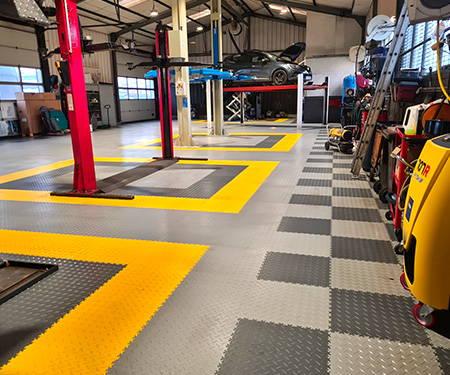
Interlocking PVC Garage Floor Tiles
PVC tiles are available in different formulations, thicknesses and surface designs. Some products are designed for heavier-duty environments where surface contact, comfort, sound and resistance to repeated traffic are important.
Evaluate: formulation, construction, indentation, wheel loads, oil compatibility and locking performance.
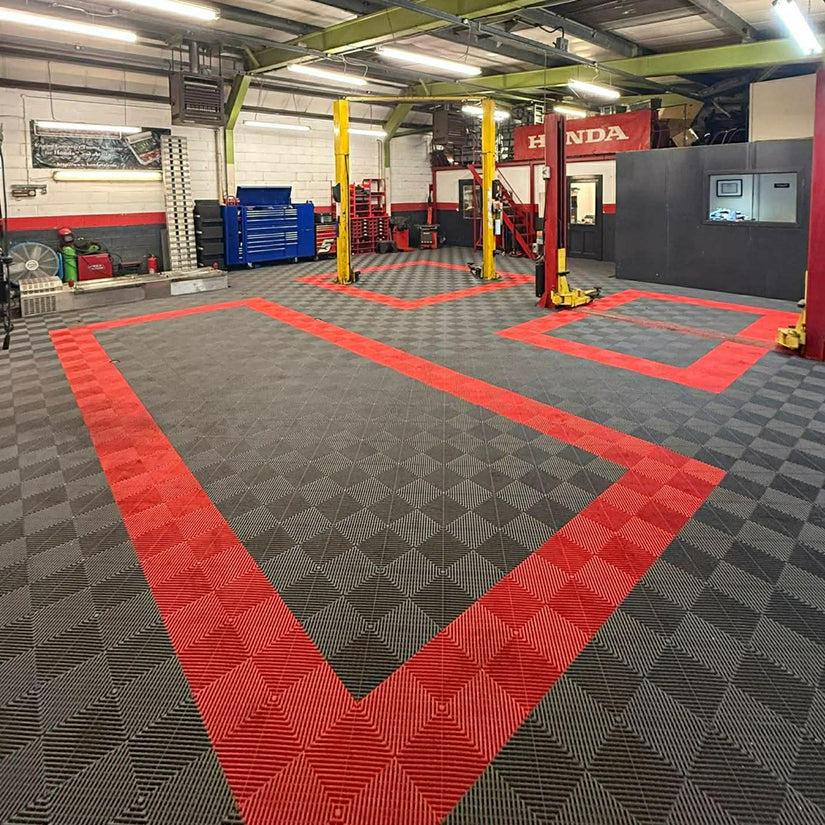
Interlocking PP Garage Floor Tiles
Polypropylene tiles are commonly used in modular garage and utility flooring systems. Designs may feature open-grid, perforated or solid surfaces.
Evaluate: structural design, load distribution, support conditions, chemical compatibility and suitability for the intended vehicle traffic.
The material name alone does not establish whether a tile is suitable for a commercial workshop.
Always evaluate the complete product specification.
2. Why Do Commercial Workshops Need Specialized Flooring?
A commercial workshop typically experiences a combination of rolling loads, concentrated equipment loads and exposure to workshop contaminants.
Vehicle Traffic
Cars, vans and service vehicles may repeatedly enter and leave the workshop. Tires also turn and brake over the floor, creating stresses that differ from stationary loading.
Hydraulic Jacks and Lifting Equipment
Vehicle jacks, lift supports and equipment feet may apply concentrated loads over relatively small contact areas.
A tile that performs well under normal vehicle movement may not be suitable beneath a hydraulic jack or vehicle lift.
Oil and Grease
Automotive workshops commonly encounter engine oil, transmission fluid, lubricants, grease and cleaning products.
Chemical compatibility should be checked against the actual substances used in the facility.
Tools and Equipment
Tool cabinets, compressors, tire-changing machines, workbenches and other equipment can introduce concentrated loads or localized impacts.
Cleaning and Maintenance
Workshop floors need to be cleaned regularly. Surface texture, joint design, liquid drainage and spill-management procedures can all affect maintenance.
These factors should be considered before choosing a tile based on price or appearance alone.
3. PVC vs. PP Garage Floor Tiles for Commercial Workshops
PVC and PP tiles can both be considered for garage flooring, but their performance depends on the specific product design.
Factor PVC Garage Tiles PP Garage Tiles
Typical formats Solid or layered modular tiles Solid, structured or open-grid tiles
Surface design Smooth or textured Solid, textured or perforated
Underfoot feel Depends on formulation and construction Depends on structural design
Vehicle traffic Product-dependent Product-dependent
Point-load performance Must be verified Must be verified
Oil and chemical resistance Formulation-dependent Chemical-dependent
Water management Depends on surface and installation Open-grid designs may allow drainage
Individual replacement Often possible with modular designs Often possible with modular designs
Best selection method Match the specification to the application Match the specification to the application
Which Material Is Better?
There is no universal winner.
PVC may be worth evaluating when a workshop needs a solid modular surface and the selected product's construction matches the vehicle and equipment requirements.
PP may be worth evaluating when the workshop benefits from a particular modular structure, open-grid design or drainage arrangement.
The decision should be based on the actual workshop environment, not simply whether PVC or PP sounds more heavy-duty.
4. What Load Requirements Should You Check?
This is one of the most important considerations when buying commercial garage floor tiles.
Vehicle Weight Is Only the Starting Point
A passenger car, delivery van and commercial vehicle can impose different loads on the floor.
However, the vehicle's total weight alone does not establish the suitability of a particular tile.
You should also consider:
- Axle and wheel load distribution
- Tire contact area
- Tire material and configuration
- Vehicle movement
- Turning and braking
- Equipment used beneath the vehicle
A vehicle parked on four tires creates a different loading condition from a hydraulic jack supporting part of the vehicle through a small contact point.
Point Loads From Workshop Equipment
Concentrated loads may come from:
- Hydraulic jacks
- Vehicle lift supports
- Wheel-alignment equipment
- Tire-changing machines
- Heavy tool cabinets
- Machine feet
- Vehicle support stands
Before placing these loads on modular tiles, verify the manufacturer's requirements and the tile's documented performance.
Do not assume that a tile suitable for driving over is automatically suitable for a hydraulic jack or vehicle lift.
Where a vehicle lift is involved, the structural slab, anchor loads, support arrangement and equipment manufacturer's requirements must be assessed separately.
5. Oil, Grease and Chemical Resistance
Automotive workshops can expose flooring to a wide range of substances, including:
- Engine oil
- Gear oil
- Hydraulic fluid
- Grease
- Coolants
- Brake fluids
- Cleaning agents
- Solvents
Not every flooring material reacts the same way to every chemical.
Even within the same polymer category, formulation and product construction can affect performance.
Before ordering garage floor tiles, provide the supplier with:
1. Chemical name
2. Concentration
3. Temperature
4. Expected contact duration
5. Frequency of exposure
6. Cleaning method
Request relevant chemical-resistance information for the exact product.
For workshops where spills are frequent, also consider whether the surface allows easy removal of contaminants and whether liquids can accumulate in the joints or beneath the tiles.
6. Slip Resistance and Workshop Safety
A workshop floor can become slippery due to oil, water, grease, dust and cleaning products.
Choosing a textured tile may help provide traction, but texture alone does not prove slip resistance under every condition.
Consider the following:
- Dry and wet operating conditions
- Likelihood of oil contamination
- Surface texture
- Cleaning frequency
- Drainage requirements
- Relevant workplace safety standards
If slip performance is a project requirement, request test results using an appropriate method.
Do not rely solely on descriptions such as "anti-slip" or "non-slip."
The final selection should account for the actual environment and the workshop's housekeeping procedures.
7. Can Garage Floor Tiles Support Cars and Vans?
Some garage floor tile systems are designed for vehicle traffic, but suitability varies by product.
Before selecting a tile for a commercial repair shop, confirm:
- Maximum vehicle and wheel-load conditions
- Tire type and contact area
- Repeated traffic suitability
- Turning and braking limitations
- Surface wear performance
- Locking-system stability
- Substrate requirements
Also distinguish between three separate applications:
Application What to Verify
Vehicle parking Static wheel loads and support conditions
Vehicles driving across the floor Rolling traffic, turning, braking and wear
Jacks or vehicle lifts Concentrated loads and equipment-specific requirements
These applications should not be treated as interchangeable.
For workshops servicing heavier vehicles, request product-specific technical data before making a purchasing decision.
8. Installation Over Existing Concrete
One reason commercial workshops consider modular floor tiles is the potential to renovate an existing floor without removing the entire concrete slab.
Depending on the product, installation may be possible over a suitable existing hard surface.
Before installation, inspect the substrate.
Floor Flatness
Large variations in height can affect tile stability and joint engagement.
Concrete Condition
Loose concrete, severe cracking and unstable areas should be evaluated and repaired.
Oil Contamination
Oil may remain in porous concrete and can complicate installation or affect the performance of certain systems.
Moisture
Excessive moisture may affect the suitability of some flooring systems. Follow the manufacturer's requirements.
Existing Coatings
If installing over epoxy or another coating, confirm that the coating is firmly bonded and stable.
Drainage and Door Clearances
Consider floor drains, thresholds, doors, ramps and equipment clearances before finalizing the tile thickness.
Important: Modular tiles can cover a suitable surface, but they cannot automatically correct structural defects, serious unevenness or an unstable substrate.
9. How to Install Interlocking Garage Floor Tiles
The exact installation method depends on the tile design, but a typical process includes the following steps.
Step 1: Inspect the Existing Floor
Check for cracks, uneven areas, moisture, oil contamination and loose coatings.
Step 2: Clean the Substrate
Remove dust, dirt, grease and other contaminants using a suitable cleaning method.
Step 3: Plan the Layout
Identify walls, columns, doorways, vehicle routes, drains and equipment positions.
Step 4: Start From the Recommended Position
Follow the manufacturer's instructions for starting points and interlocking direction.
Step 5: Connect the Tiles
Engage the locking edges correctly and check that joints are aligned.
Step 6: Cut Boundary Tiles
Make appropriate cuts around walls, columns and other obstacles, following the manufacturer's installation guidance.
Step 7: Inspect the Finished Surface
Check for open joints, damaged edges, uneven areas and incorrect locking.
Step 8: Confirm Before Returning Equipment to Service
Follow the manufacturer's recommendations before introducing vehicles, hydraulic jacks or heavy workshop equipment.
Some applications may require additional edge treatment, restraint or other installation measures.
10. How to Maintain Garage Floor Tiles in a Commercial Workshop
Maintenance requirements depend on the material, surface design and workshop conditions.
A practical maintenance plan may include the following.
Routine Cleaning
Remove dust, metal particles, rubber debris and other contaminants.
Oil and Fluid Spills
Clean spills promptly using methods compatible with the flooring material.
Periodic Inspection
Check for:
- Cracked or damaged tiles
- Loose or separated joints
- Localized deformation
- Surface wear
- Contaminants trapped beneath tiles
- Movement around entrances and edges
Localized Replacement
If a tile becomes damaged, some modular systems allow the affected tile or section to be replaced.
Before replacement, identify the cause of the damage. Replacing the tile without addressing excessive point loads, substrate problems or unsuitable traffic conditions may lead to repeated failures.
11. How to Choose Garage Floor Tiles for Different Commercial Workshops
Different businesses have different flooring priorities.
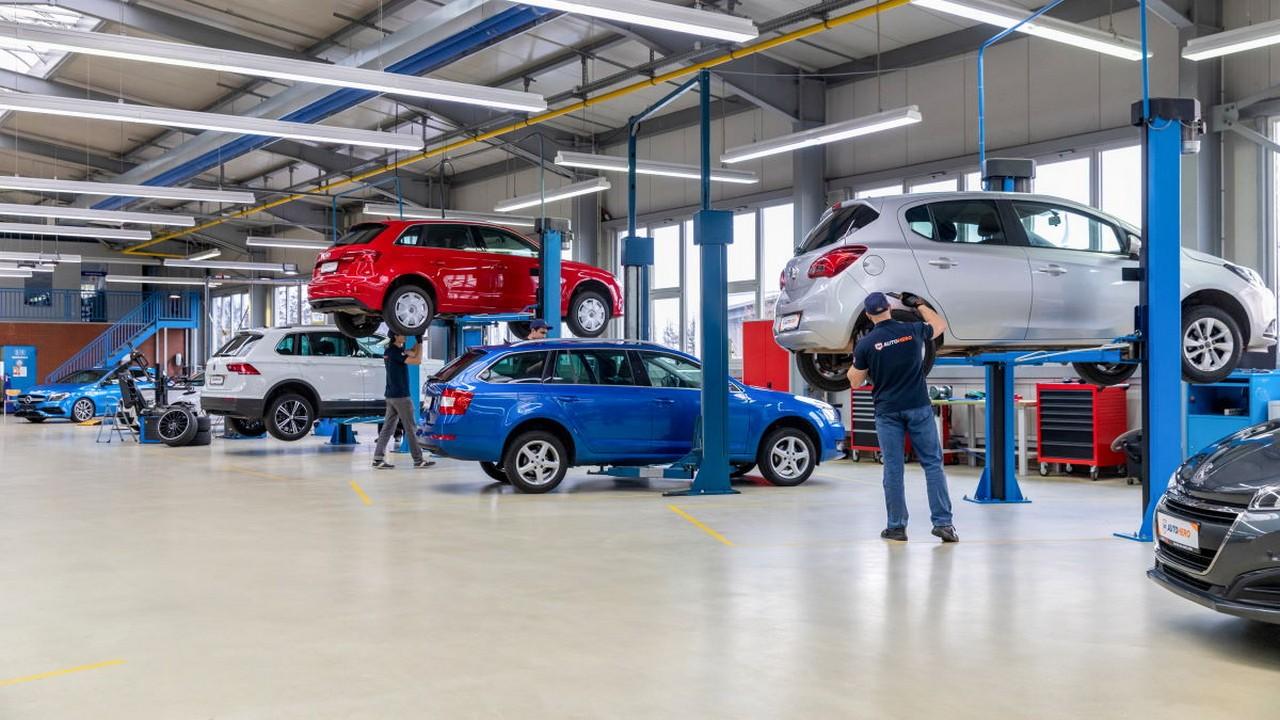
Automotive Repair Shops
Prioritize vehicle traffic suitability, oil and grease compatibility, slip performance, ease of cleaning and maintenance access.
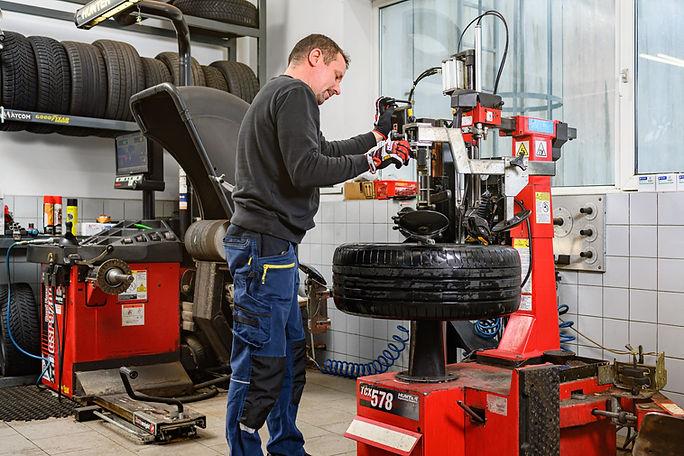
Tire Shops
Evaluate repeated vehicle movement, tire-changing equipment, concentrated machine loads and resistance to workshop contaminants.
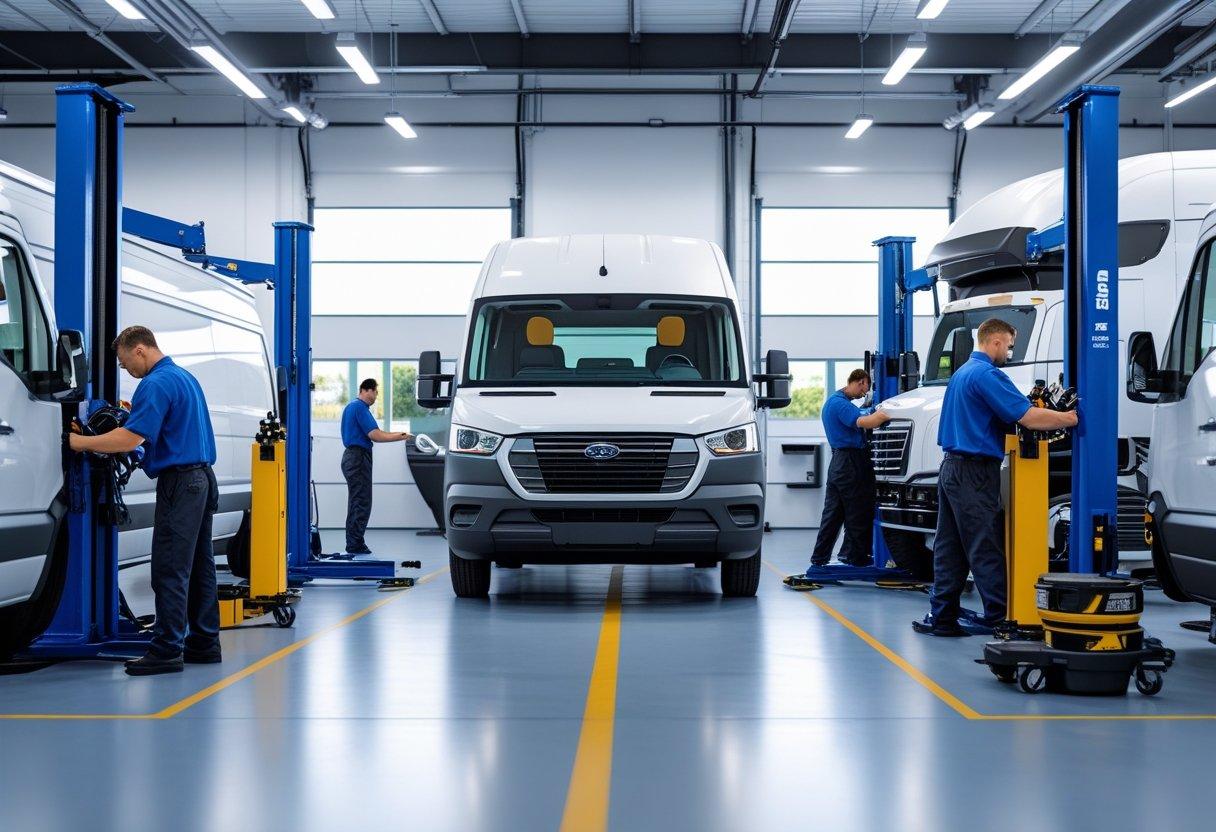
Fleet Maintenance Facilities
Confirm the vehicle types and operating weights, traffic frequency, wheel loads and equipment requirements. Heavier vehicles may need a different flooring specification.
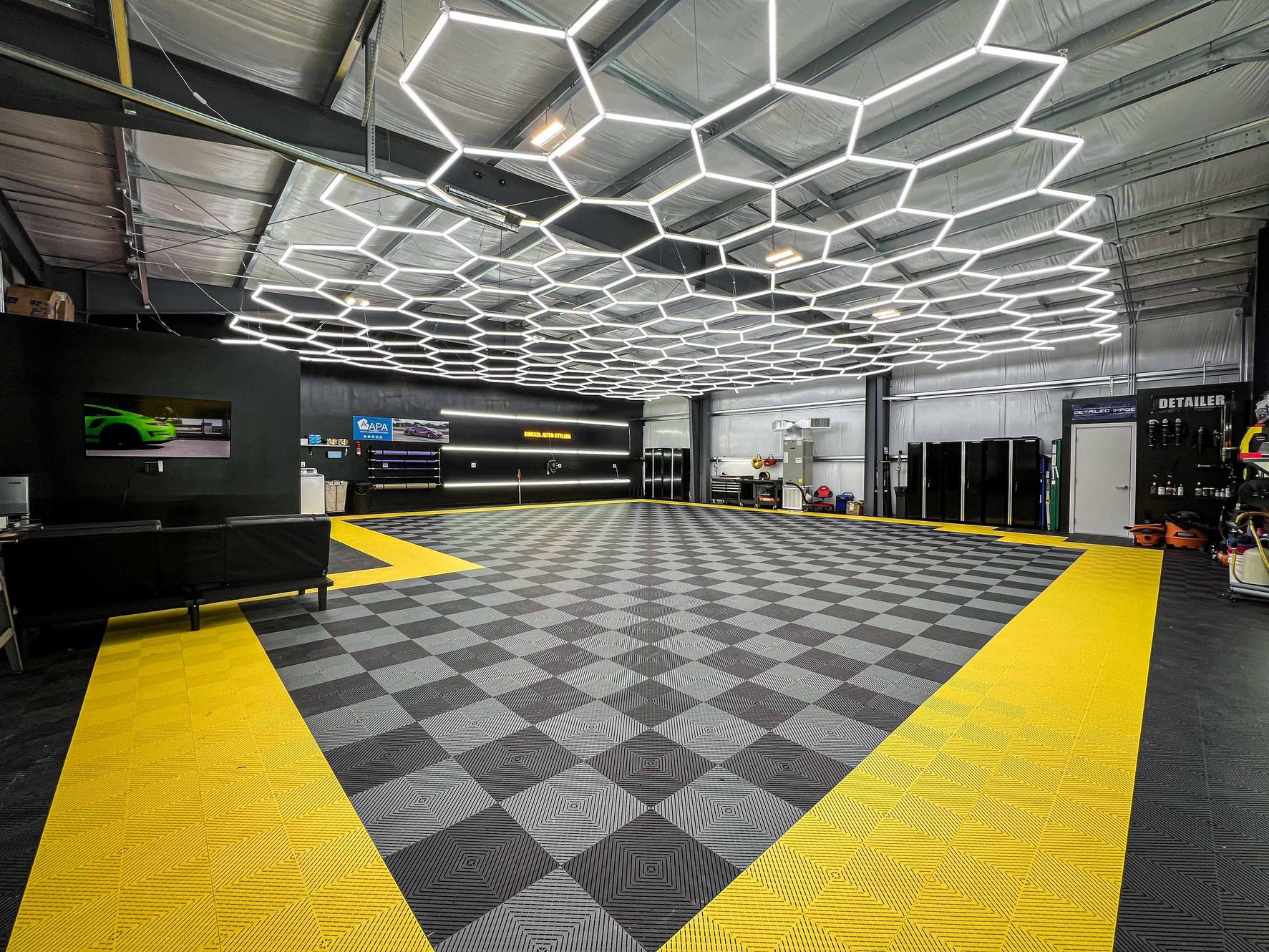
Vehicle Detailing Centers
Focus on water management, cleaning compatibility, surface traction and the removal of dirt and residues.
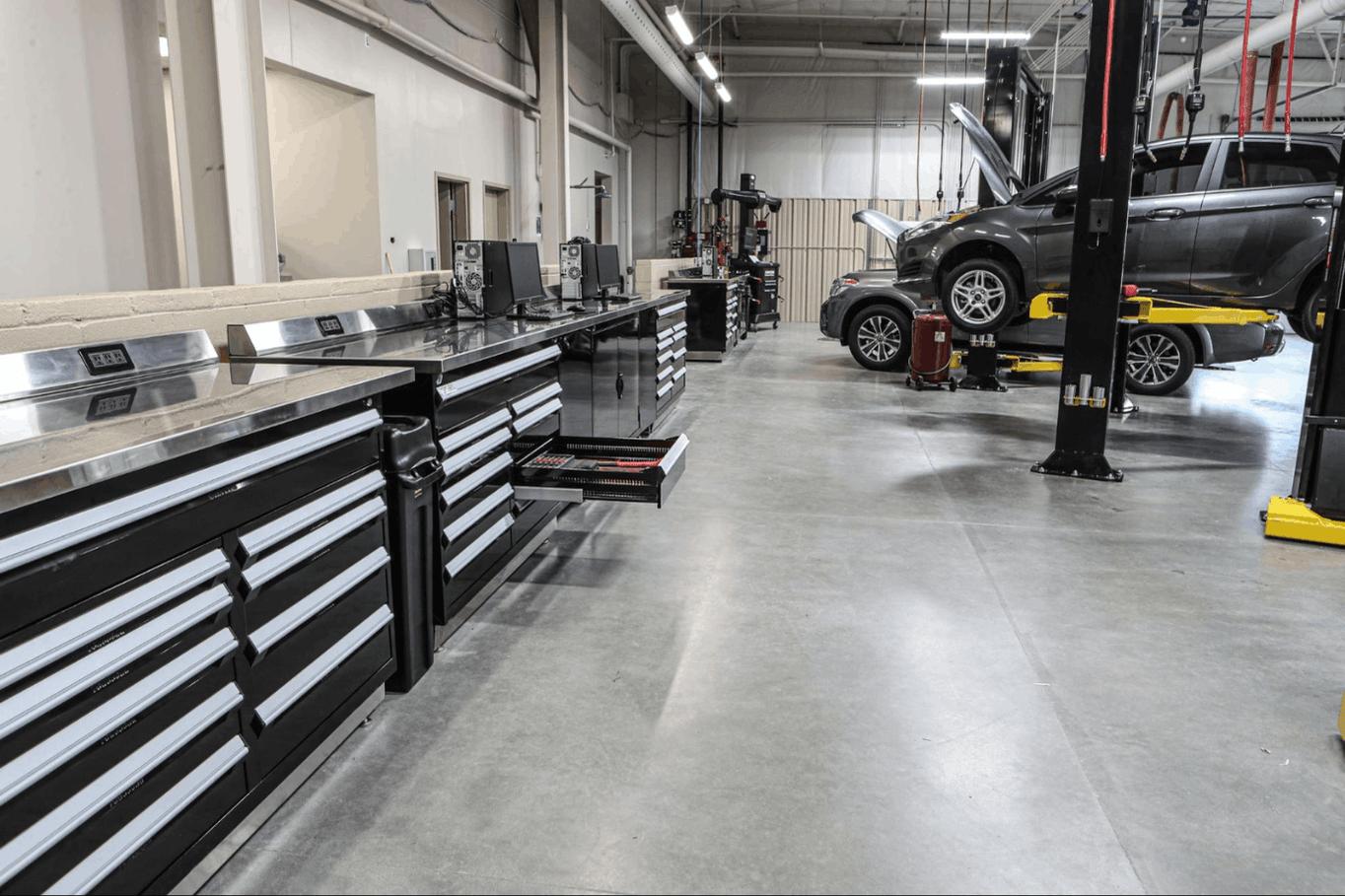
General Maintenance Workshops
Consider equipment point loads, tool cabinets, surface durability, maintenance access and the condition of the existing concrete.
12. Garage Floor Tiles vs. Epoxy Flooring
Commercial buyers often compare modular garage floor tiles with epoxy coatings.
Neither option is automatically better for every workshop.
Factor Interlocking Garage Tiles Epoxy Flooring
Installation format Individual modules Continuous coating
Installation process Tile assembly Surface preparation and coating
Curing time Usually not required for mechanical installation Depends on the coating system
Localized replacement Possible with modular tiles Requires coating repair
Phased renovation Often practical Possible, but preparation and curing affect scheduling
Existing floor requirements Suitable stable substrate needed Suitable prepared substrate needed
Vehicle traffic Product-dependent System-dependent
Oil resistance Product-dependent Formulation-dependent
Concentrated loads Must be verified Must be verified
Initial project cost Depends on product and preparation Depends on coating and preparation
Long-term maintenance Depends on use and maintenance Depends on use and maintenance
When comparing prices, calculate the total project cost rather than looking only at the price per square meter.
Total Cost of Ownership = Material + Preparation + Installation + Downtime + Maintenance + Repairs + Replacement
13. Common Mistakes When Buying Commercial Garage Floor Tiles
Mistake 1: Choosing Based Only on Thickness
A thicker tile is not automatically stronger or more suitable for every workshop.
Material formulation, construction, joint design and loading conditions also matter.
Mistake 2: Assuming Vehicle Traffic Means Jack Compatibility
Driving over a tile and supporting a vehicle through a hydraulic jack are different loading conditions.
Check the manufacturer's requirements before using jacks, stands or vehicle lifts.
Mistake 3: Ignoring Chemical Exposure
Ask about the specific oils, fluids and cleaning chemicals used in the workshop.
Mistake 4: Installing Over Contaminated Concrete
Oil, grease and loose coatings can create problems even when the new flooring is modular.
Mistake 5: Ignoring the Locking System
The joint is an important part of an interlocking floor. Confirm locking performance and suitability for the intended traffic.
Mistake 6: Choosing by Appearance Alone
A decorative tile may look suitable but lack the technical performance required for commercial vehicle or equipment loads.
Mistake 7: Overlooking the Total Cost
Installation time, floor preparation, maintenance and replacement can influence the actual project cost.
14. Commercial Garage Floor Tiles: Buyer Checklist
Before requesting a quotation, prepare the following information.
Project Detail Information to Provide
Floor area Total m²
Workshop type Repair shop, tire shop, fleet maintenance or detailing
Vehicle types Cars, vans, light commercial vehicles or heavier vehicles
Traffic Parking, occasional movement or frequent daily traffic
Equipment Hydraulic jacks, vehicle lifts, tire machines and tool cabinets
Loads Vehicle/wheel loads and concentrated equipment loads
Chemicals Oils, fluids, grease and cleaning products
Existing floor Concrete, epoxy, cracks, uneven areas or contamination
Installation Available downtime and phased renovation requirements
Location Country and city
Ask your supplier for the relevant technical information:
- Material formulation
- Tile dimensions and thickness
- Tile weight and dimensional tolerance
- Locking-system design
- Wear and indentation data
- Load-performance data, where available
- Chemical-resistance information
- Slip-resistance test data, where required
- Fire classification, where required
- Installation instructions
- Warranty terms
- Packaging and delivery details
The documentation should correspond to the exact product specification being quoted.
Frequently Asked Questions
What are the best garage floor tiles for commercial workshops?
The best option depends on the workshop's vehicle traffic, equipment loads, chemical exposure, safety requirements and installation conditions. PVC and PP tiles can both be considered for suitable applications.
Are interlocking PVC garage floor tiles suitable for automotive repair shops?
Some PVC tile systems may be suitable, but buyers should verify vehicle traffic, wheel loads, point loads, oil compatibility and locking performance for the specific product.
Can garage floor tiles withstand hydraulic jacks?
Not automatically. Hydraulic jacks create concentrated loads that may differ significantly from normal wheel loads. Follow the tile manufacturer's instructions and use suitable load-distribution equipment only where permitted.
Can I install garage floor tiles over existing concrete?
Many modular systems can be installed over suitable concrete. The surface must meet the manufacturer's requirements for flatness, stability, moisture and cleanliness.
Are PVC or PP tiles better for workshops?
Neither material is universally better. Compare the specific product construction, load performance, chemical compatibility, surface design and maintenance requirements.
Are interlocking garage floor tiles resistant to oil?
Resistance depends on the material formulation and the specific oil or fluid. Request chemical-resistance information for the exact product and expected exposure conditions.
How long do commercial garage floor tiles last?
Service life depends on the product, traffic intensity, wheel type, point loads, chemical exposure, installation quality and maintenance. Avoid relying on a generic lifespan without application-specific evidence.
Can individual garage floor tiles be replaced?
Many interlocking systems allow individual tiles or sections to be replaced. The actual process depends on the locking design and installation method.
Conclusion: Choose Garage Floor Tiles Based on Real Workshop Conditions
Garage floor tiles can provide a modular flooring option for commercial automotive workshops, tire shops, fleet maintenance facilities and other service environments.
Their potential advantages include flexible installation, localized maintenance and the ability to renovate suitable existing floors.
However, the right system must be selected according to the workshop's actual requirements:
Vehicle Traffic + Wheel Loads + Point Loads + Chemical Exposure + Surface Safety + Substrate + Maintenance
A product that works well in a residential garage may not be suitable for a commercial repair facility.
Before making a decision, confirm the technical specifications, review the available test data and make sure the flooring system is appropriate for the intended vehicles and equipment.
Planning a Commercial Workshop Flooring Project?
Looking for garage floor tiles for a commercial workshop, automotive repair center or fleet maintenance facility?
Send us:
- Floor area: How many square meters?
- Workshop type: Automotive repair, tire service, detailing or fleet maintenance?
- Vehicle types: Cars, vans or heavier vehicles?
- Equipment: Hydraulic jacks, vehicle lifts or machinery?
- Chemical exposure: Oils, grease, fluids or cleaning agents?
- Existing floor: Concrete, epoxy or another surface?
- Project location: Country and city?
We can help evaluate the application and identify a suitable PVC or PP interlocking floor tile specification for your project.
Contact us for product details and a project-specific quotation.
Post time: Oct-12-2026