
High-Quality Horse Barn Flooring Supplier
From day one, I deliver horse barn flooring that stands up to heavy stall use, easy cleaning, and year after year reliability. I'm a High-Quality Supplier, focused on durable surfaces that protect horses and footing while lowering maintenance costs. My horse barn flooring solutions resist moisture, sweat, and wear, with slip resistance and antimicrobial options for clean stalls. I tailor to commercial stables, equestrian centers, and boarding facilities, offering bulk pricing, fast lead times, and seamless installation guidance. Materials include rubberized mats, interlocking tiles, and seamless poured surfaces designed for drainage and comfort underfoot. I provide testing data and certifications, insurance coverage, and a warranty that fits large-scale operations. Let me help you optimize safety, reduce downtime, and improve stall hygiene with a flooring system built for heavy use. Reach out for samples, project quotes, and technical support today.
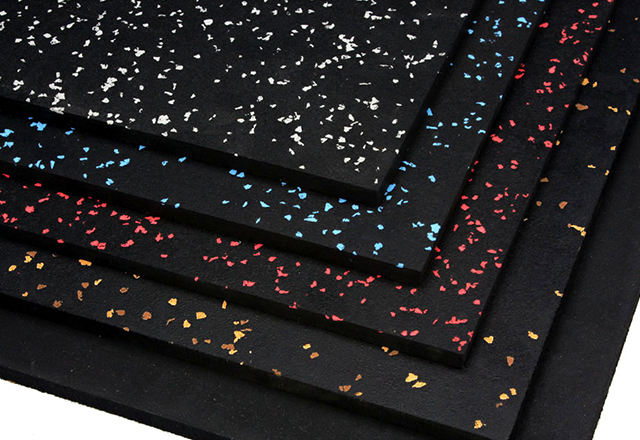
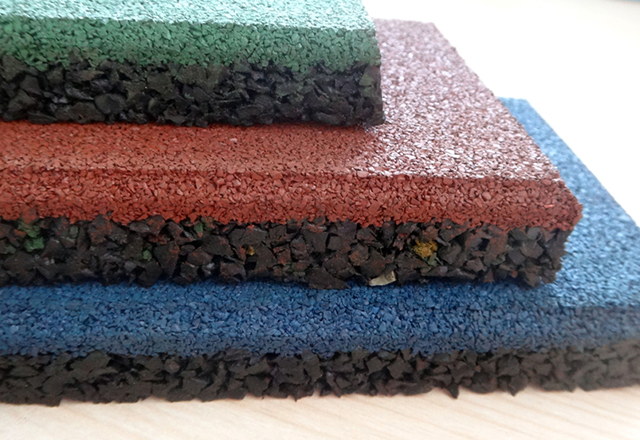
horse barn flooring Products Market Leader
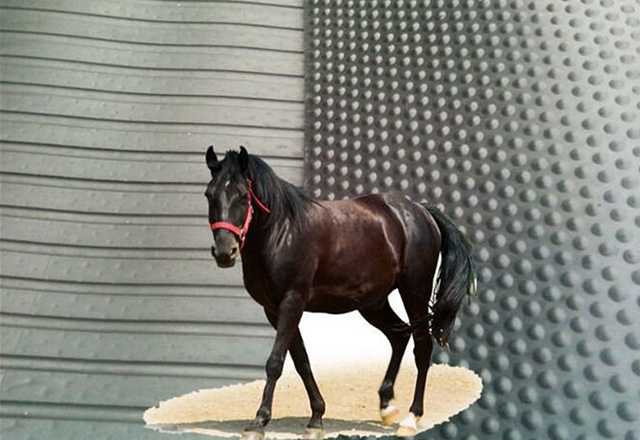
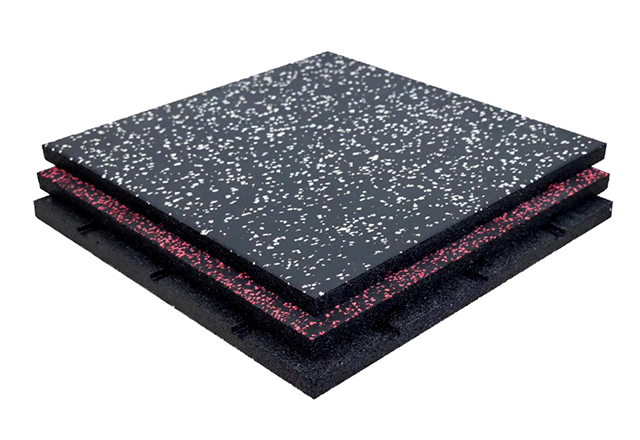
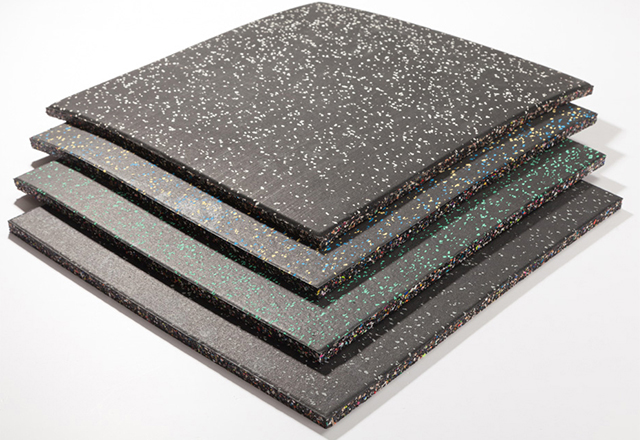
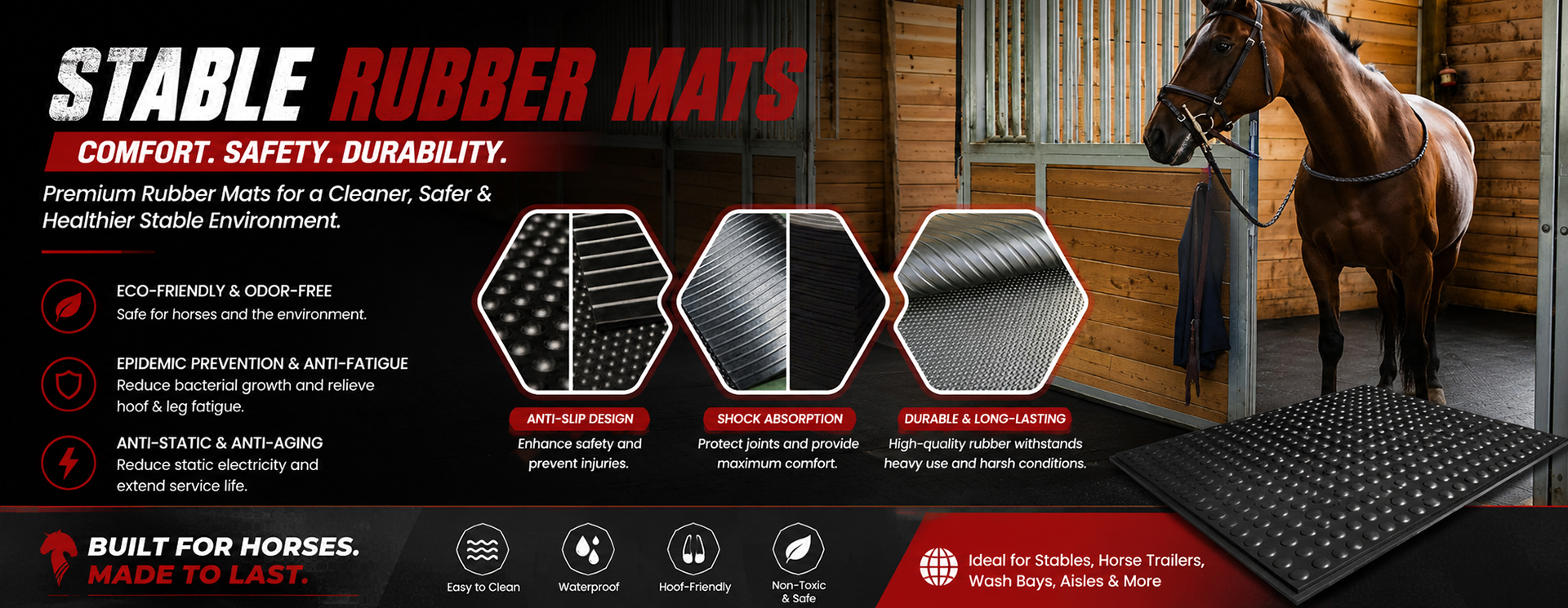
As a market leader in horse barn flooring products, our engineered rubber solutions combine equine comfort, safety and long-term value. Designed with non-slip textures, superior shock absorption and thermal insulation, these mats reduce injury risk, lower maintenance and improve stall hygiene with easy drainage and antimicrobial options. Available in multiple thicknesses, interlocking styles and customizable sizes, the range fits stalls, wash bays, trailers and arenas while minimizing noise and protecting underlying concrete. Backed by advanced manufacturing and rigorous quality control, our flooring offers an extended service life and consistent performance at competitive cost. Produced with sustainable materials and tested to international quality standards, we support large-volume projects with flexible OEM capability, reliable lead times and global logistics. For global buyers seeking a durable, high-performance stable flooring partner, this product line delivers proven results and responsive technical support.
| Category | Primary Materials | Typical Applications | Expected Lifespan (years) | Maintenance | Slip Resistance (Dry / Wet, approx. COF) | Drainage | Bedding Compatibility | Environmental Notes | Relevant Standards / Tests |
|---|---|---|---|---|---|---|---|---|---|
| Rubber Stall Mats | Vulcanized or molded rubber (often recycled content) | Individual stalls, grooming aisles, wash areas (with slope) | 10–20 | Low — sweep, hose, periodic deep clean | ~0.80 / ~0.60 | Moderate — grooved or interlocking options improve flow | Excellent — works with shavings, peat, sawdust | Variable recycled content; recyclable where facilities exist | Meets common industry slip-resistance test criteria (ASTM guidance) |
| Interlocking Rubber Pavers | Recycled rubber granules bound into pavers | Aisles, high-traffic walkways, turnout access | 8–15 | Low–Medium — occasional lifting and re-seating, cleaning | ~0.75 / ~0.65 | Good — many designs allow surface/perimeter drainage | Good — accepts bedding on top or used with minimal bedding | High recycled content options reduce landfill use | Manufactured to resist compression and abrasion; slip test compliant options |
| Cast Concrete (textured / sealed) | Cast concrete with textured finish and protective sealer | Wash bays, alleys, heavy vehicle paths | 25–50 | Medium — reseal every 3–7 years; pressure wash | ~0.60 / ~0.45 | Low unless sloped to drains or cut for channels | Poor — not ideal for direct bedding use; mats recommended | High embodied carbon; long life offsets replacement frequency | Engineered to flooring and slip-resistance specifications; meets local building codes |
| Porous Pavers / Grid Systems | Plastic or concrete grids filled with gravel or turf | Turnouts, paddocks, run-in sheds, access roads | 15–30 | Low — occasional regrading, infill replacement | ~0.65 / ~0.60 | Excellent — designed for infiltration and reduced runoff | Compatible with minimal bedding; often used without loose bedding | Reduces surface runoff; can use recycled plastic grids | Permeability and load-bearing tests applicable; erosion control standards |
| Composite Panels / PVC Flooring | Wood-plastic composite or rigid PVC panels | Aisles, stable offices, tack rooms | 10–25 | Low — sweep, hose, avoid harsh solvents | ~0.70 / ~0.60 | Variable — some perforated options available | Not typically used as stall bedding surface | Often contains recycled content; not biodegradable | Manufactured to dimensional stability and slip guidelines |
| Sand-Filled Rubber Matting | Rubber mats with sand ballast or infill | Outdoor paddocks, wash areas, heavy-trafficked zones | 7–12 | Medium — sand refill and periodic cleaning | ~0.75 / ~0.70 | Good — sand-filled systems drain well | Good — compatible with common stall bedding | Rubber often recycled; sand is inert and widely available | Designed for anti-slip and load distribution; field-tested |
| Crushed Stone Dust over Geotextile | Compacted stone dust set on geotextile membrane | Aisles, turnout paths, arena surrounds | 5–15 (depends on compaction & drainage) | Medium — periodic regrading, topping up | ~0.60 / ~0.50 | Good — geotextile helps separation and drainage | Not intended for bedding use in stalls | Locally sourced stone reduces transport footprint | Geotextile and subbase standards apply; compaction specs recommended |
| Extruded Rubber Mats with Drain Channels | Molded rubber featuring integrated drainage channels | Stalls, wash bays, grooming areas | 12–20 | Low — hose out channels, occasional lift | ~0.80 / ~0.65 | Excellent — built-in channels for rapid moisture removal | Excellent — retains bedding while allowing drainage | Often produced with recycled rubber; long usable life | Meets slip-resistance testing and compression rating norms |
| Exposed-Aggregate or Sand-Aggregate Concrete | Concrete with non-slip aggregates or additives | Aisles, wash areas, entrance aprons | 20–40 | Medium — maintenance similar to sealed concrete | ~0.65 / ~0.55 | Low unless sloped/drained | Not for stalls; use with mats for equine comfort | Good durability but higher carbon footprint | Designed for slip resistance; conforms to construction standards |
Related Products
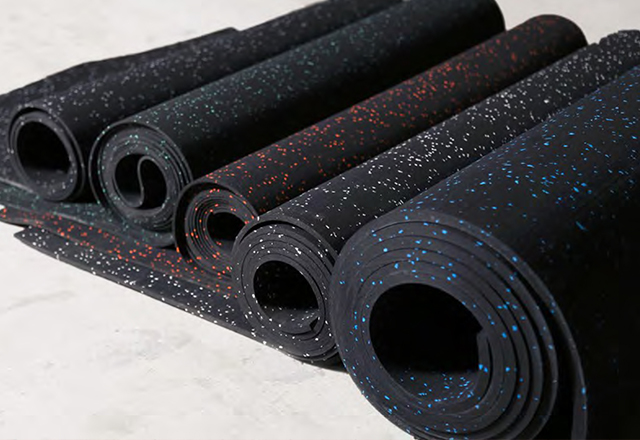
horse barn flooring Trusted by Pros Supplies the World\u2019s Top Brands
Top Selling Products
- Related Blog
- Reviews
