
Logistics Warehouse Flooring for Wholesale & Manufacturers
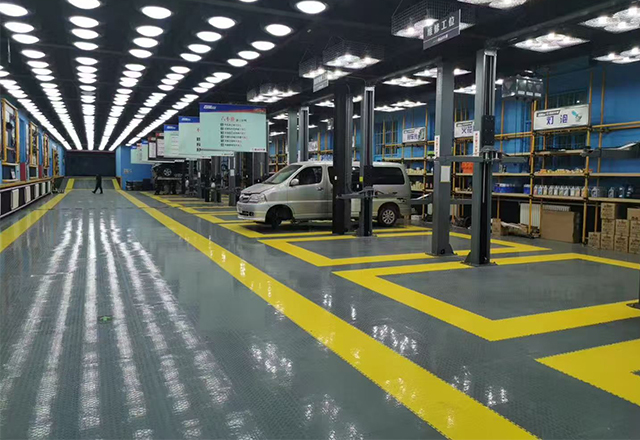
From the first contact, I explain why our logistics warehouse flooring is the smart choice for Wholesale buyers and Manufacturers. Our floors handle heavy pallets, forklifts, and fast-moving goods without cracking or peeling. I know uptime and safety are crucial, so our seamless epoxy-polyurea blends deliver abrasion resistance, chemical spill protection, and slip resistance. They’re easy to clean, temperature tolerant, and stay looking good in tough industrial environments. Installation is fast with minimal downtime, often a simple upgrade rather than a shutdown. We offer custom thickness and finish options to match your dock height, traffic, and cleaning routines. For Wholesale distributors and Manufacturers, we provide scalable terms, reliable lead times, and end-to-end support. I stand behind our flooring with test results and reference projects. If you’re evaluating floor solutions, you’ll find this choice durable, balanced, and cost-effective.
logistics warehouse flooring Factory Service Backed by Expertise
Warehouse flooring directly affects uptime, safety, and total cost of ownership for global logistics. It must endure forklift traffic, heavy loads, and frequent cleaning while resisting chemicals and abrasion. A factory-backed service delivers this reliably: controlled formulation, on-site quality checks, and streamlined installation with consistent results across sites. Keeping production and testing under one roof ensures durable performance in both climate-controlled warehouses and rugged outdoor facilities, wherever you operate. For global buyers, the value is end-to-end confidence: tailored specs, rapid prototyping, and clear project plans that minimize downtime. Standardized processes guide on-site teams, while remote support and planned maintenance keep performance steady. Post-installation audits, preventive upkeep, and warranty coverage protect long-term value. With a worldwide service network and strict safety standards, buyers gain predictable lead times, durable flooring, and lower total cost of ownership across distribution campuses.
{ logistics warehouse flooring Factory Service Backed by Expertise }
| Material Type | Measurement | Value | Unit | Notes |
|---|---|---|---|---|
| Epoxy Resin Flooring | Hardness | 72 | Shore D | Typical surface hardness for industrial epoxy coatings |
| Epoxy Resin Flooring | Abrasion Resistance (Taber) | 22 | mg | After 1000 cycles, moderate wear resistance |
| Epoxy Resin Flooring | Slip Resistance (Pendulum) | 0.65 | COF | R11–R12 range depending on texture |
| Epoxy Resin Flooring | Initial Cure Time (Walkable) | 24-48 | hours | Ambient conditions, light traffic possible |
| Epoxy Resin Flooring | Full Cure Time | 7 | days | Full chemical resistance achieved |
| Polyurethane Flooring | Hardness | 68 | Shore D | Flexible topcoat with good impact resistance |
| Polyurethane Flooring | Abrasion Resistance (Taber) | 28 | mg | Slightly less rigid than epoxy |
| Polyurethane Flooring | Slip Resistance (Pendulum) | 0.62 | COF | Good performance in wet conditions |
| Polyurethane Flooring | Initial Cure Time (Walkable) | 24-72 | hours | Depends on formulation and film build |
| Concrete Sealer | Hardness | 60 | Shore D | Basic protection, not high-build |
| Concrete Sealer | Abrasion Resistance (Taber) | 60 | mg | Moderate wear resistance for sealed concrete |
| Concrete Sealer | Slip Resistance (Pendulum) | 0.58 | COF | Traction maintained on clean, dry surfaces |
Related Products
logistics warehouse flooring Trusted by Pros Global Reach
Top Selling Products
- Related Blog
- Reviews
